
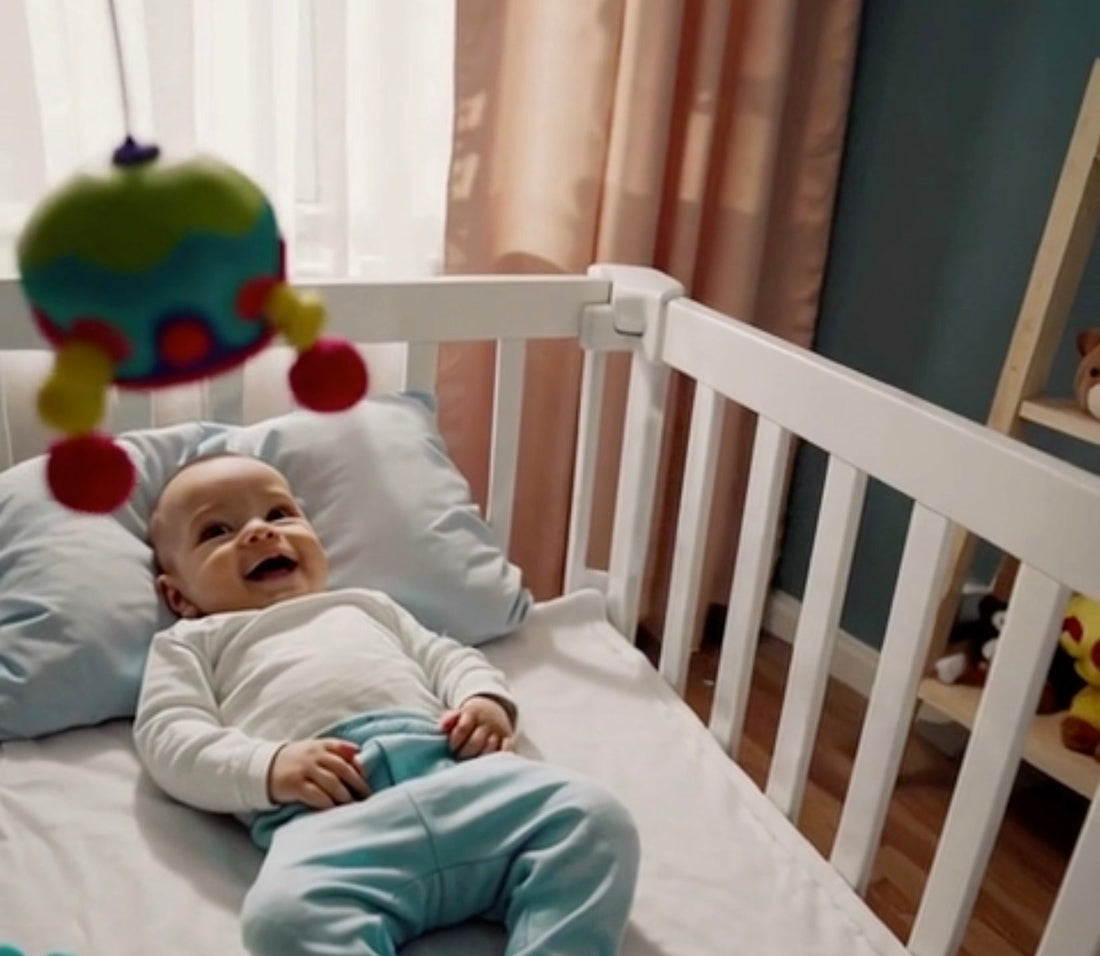
Indoor Air Pollution: An Invisible Danger to Babies' Health
When preparing a baby's room, we think first and foremost about their comfort and well-being. But an often-overlooked factor can have a considerable impact on their health: indoor air quality. Indeed, the French Agency for Ecological Transition (ADEME) highlights that indoor air can be 5 to 10 times more polluted than outdoor air due to emanations of volatile organic compounds (VOCs) and formaldehyde, present in many everyday objects.
However, babies are particularly vulnerable to this pollution.
Why are babies more sensitive to indoor air pollution?
A baby's respiratory system is still developing, and their airways are narrower than an adult's. According to a study by the National Center for Scientific Research (CNRS), an infant inhales more air per kilogram of body weight than an adult, making them more exposed to pollutants.
Furthermore, a baby spends an average of 16 hours a day in their bed, which is more than two-thirds of their time in an enclosed environment where pollutants can accumulate and stagnate.
Sources of chemical pollution in a child's room
What we think of as a haven of peace for a baby can actually contain many sources of chemical pollution:
🔹 Furniture: beds, dressers, and wardrobes made of particleboard often contain glues and varnishes that release formaldehyde for several months, or even years (Source: Indoor Air Quality Observatory - OQAI).
🔹 Paints and wallpapers: some wall paints release VOCs long after their application. ADEME recommends using solvent-free paints labeled A+.
🔹 Mattresses and textiles: many foam mattresses, curtains, and carpets contain flame retardants and other chemical substances that slowly evaporate into the air.
🔹 Plastic toys and accessories: some plastics emit VOCs when they are new or exposed to heat.
🔹 Cleaning products and air fresheners: cleaning sprays, detergents, and scented fabric softeners can release solvents and allergenic substances (Source: ANSES, French Agency for Food, Environmental and Occupational Health & Safety).
What are the health impacts on babies?
The consequences of prolonged exposure to these pollutants can be numerous:
✅ Respiratory tract irritation: runny nose, chronic cough, asthma attacks.
✅ Sleep disorders: polluted air can lead to nocturnal breathing difficulties.
✅ Allergic reactions: eczema, redness, irritated eyes.
✅ Hormonal disruptions: some chemical substances are suspected of being endocrine disruptors.
Experts' recommendations
ANSES recommends daily ventilation of the room for at least 10 minutes and preferring furniture and paints with low VOC emissions. However, these actions are not always sufficient to eliminate pollutants continuously emitted by materials present in the room.
Our purifiers capture VOCs and formaldehyde
To provide a healthy environment for your baby, it is essential to continuously purify the air.
Airpurlabs air purifiers use patented technology capable of capturing and neutralizing VOCs and formaldehyde, thus reducing their concentration in your child's room.

Ideally, place the purifier above or near the bed, so that the air your baby breathes during sleep is constantly renewed and filtered. This helps limit their exposure to pollutants and ensures more peaceful sleep.